Sibanye-Stillwater's Montana operations with Heather McDowell
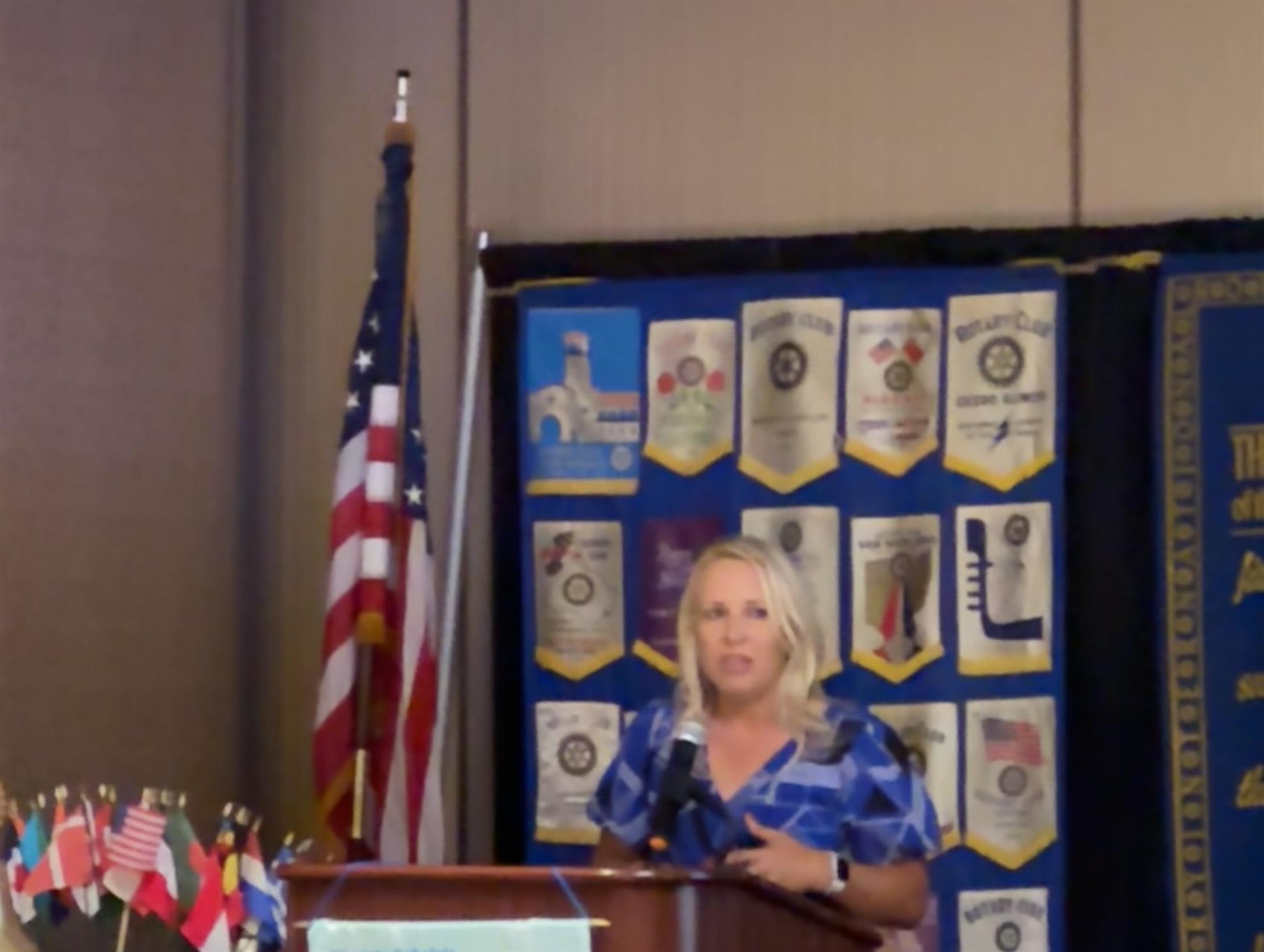 Heather McDonald, General Counsel and head of Legal and External Affairs for Sibanye-Stillwater’s Montana operations, delivers a comprehensive update to the Rotary Club on the company’s role as the sole primary producer of platinum and palladium in the United States, its sustainable mining practices, economic impact, challenges in the global market, and efforts to differentiate its ethically sourced metals. Sibanye-Stillwater operates the only primary platinum and palladium mines in the U.S., located in Montana, with the highest-grade deposit (JM Reef) in the world. This geological formation contains the highest known concentration of platinum group metals (PGMs) globally. The company began operations at Stillwater in 1886, though the current mining methods are modern. Mining follows a narrow, seven-foot-wide ore body akin to "the frosting in a layer cake," necessitating precise underground navigation through complex terrain. The ore is extracted using drilling and dynamite, then crushed into fine powder at on-site concentrators. The material is transported to a metallurgical complex in Columbus, MT, where it is dried and smelted. A key environmental advantage is that the ore naturally binds with sulfides, reducing acid leaching risks in tailings, unlike many other mining operations. Sibanye-Stillwater integrates recycled catalytic converters with mined ore in its smelting process. For the past 12 years, the company has recycled more material than it has mined. Spent catalytic converters—decanned and powdered—are sourced primarily from the U.S. and mixed with mine ore in the smelter. The process produces a concentrate that is 68% platinum and palladium, with trace rhodium.
The company contributes $6 billion to Montana’s economy—surpassing tourism—and supports over 1,000 high-quality jobs, though a 2025 downturn led to a 640-person layoff. Its operations are environmentally advanced, with 99% SO2 capture, a Good Neighbor Agreement to preempt conflict, and engineered tailings impoundments, setting a U.S. mining benchmark. Despite superior practices, the company struggles in a global commodity market where its product cannot be physically differentiated, competing against lower-cost producers like Russia’s Norilsk Nickel, which benefits from state subsidies. The company’s current production cost is between $1,400 and $1,500 per ounce, while the market price for palladium is around $1,450 per ounce. To survive, it aims to reduce costs to $1,000 per ounce through full mechanization of mining operations, moving away from labor-intensive jackleg mining. A U.S. trade case led to 242% tariffs on Russian palladium imports, which were temporarily effective, but the company lost the injury claim at the International Trade Commission (ITC) and is now appealing.